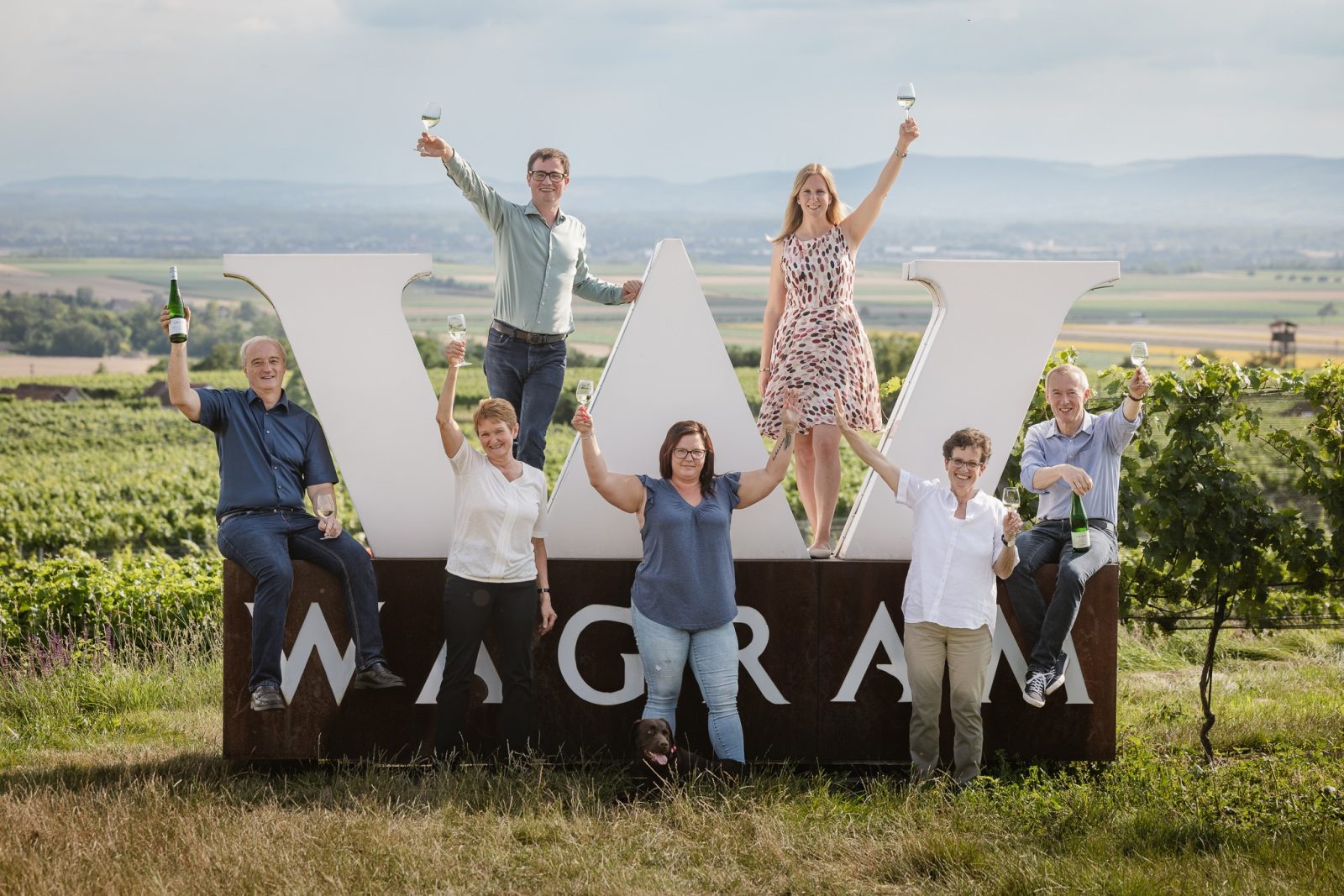
When you see the Wagram for the first time, you understand why a magazine compared it to a giant whale. The ridge, which stretches some 30 kilometres, lies broad and sluggish across the landscape east of Krems. Vines are rooted in its loess, and nestled within it is Fels am Wagram, a village of around 2,300 inhabitants. This is where the Leth family established their winery.
From Half a Hectare to Family Business
It began without any grand vision. In the early 1960s, Franz and Barbara Leth ran a small, mixed farm with no more than half a hectare of vines. Sources differ on the founding year, citing either 1960 or 1961. Gradually, wine production moved into focus. Their sons Franz and Erich trained in Klosterneuburg and Krems respectively and joined the business in 1981. During the 1980s and 1990s, they developed it into one of the leading estates on the Wagram.
The Third Generation
Today Franz Leth junior runs the winery and oversees production as cellar master. His uncle Erich looks after the vineyards, whilst his father Franz is the public face of the house. According to Vinum, he acts as "ambassador for the winery", serving customers around the world. Back in 2020, around three-quarters of the wines were exported, reaching as far as Singapore, Finland, Sweden, England and the USA.
Loess, Gravel and the Veltliners
The vines grow on around 52 hectares, mostly in the vineyard sites Brunnthal, Scheiben and Steinagrund. More than half of these are planted with Grüner Veltliner. Then there is Roter Veltliner, a regional rarity, which receives considerable attention from the winery. The loess layers reach depths of up to 20 metres, allowing roots to penetrate deep. Riesling, by contrast, thrives in the sparse red gravel of the ancient Danube. The portfolio also includes Zweigelt and Pinot varieties, as well as sparkling wine, such as a Blanc de Noirs Brut Große Reserve. As a member of Traditionsweingüter Österreich, Leth classifies its finest vineyard wines as "Erste Lage".
A Garden Full of Rarities
One vineyard parcel has a special story. In the early 1990s, Franz Leth senior fulfilled a long-cherished wish. He planted as many old, nearly extinct grape varieties as possible. He searched for them, propagated them and planted them out. The result is considered one of Austria's largest "living grape variety museums". It is a gene pool that, according to Vinorama, even scientists value for their research.
Organic and Long Memory
The winery has worked close to nature for decades, avoiding herbicides and insecticides. The wines are certified "Nachhaltig Austria" and have been certified organic since the 2021 vintage. The range also includes aged wines dating back to the 1973 vintage.
Sources describe the house as a family business built on "idealism, innovation and investment".
What was once a farm with half a hectare has become a winery that combines tradition with curiosity. It has rescued old varieties, committed to organic viticulture and sells its wine around the world.
Sources: www.vinum.eu, www.vinorama.at, www.weinguide.at, fels-wagram.at, www.thesortingtable.com, wineguide.wein.plus, www.weingut-leth.at